
- Sep 21
Can't spell "utilitarianism" without you
- Nanna Freeman
- Philosophy, Television, Literature
- 0 comments
Ah, utilitarianism! That philosophical concept so elegantly captured in the Trolley Problem (for those not in the know: utilitarianism - in a nutshell - is an ethical philosophy which posits that the right action is the one that results in the happiness and well-being of the largest number of people). As I immersed myself in Apple+'s multi-Emmy-winning Widow's Bay this summer, it tickled my brain again.
You see, for someone who teaches critical thinking, logic, some ethics, and who has a research master's in Art & Literature, I am (perhaps surprisingly) reticent about Philosophy-with-a-capital-P. It makes me feel, to put it bluntly, stupid. Neither my scientific/academic philosophy classes nor my philosophy-loving father (he had a little bust of Socrates proudly displayed on the piano as I grew up) were able make a dent in my deep-seated revulsion towards the writings of the Great Thinkers of the Past. I even rejected, despite being a proper book worm, Sophie's World, the philosophical hit novel from Norway, popular during my formative years.
Utilitarianism, however, I can work with. Maybe it's the straightforwardness of the Trolley Problem. Maybe it's Maybelline. Or maybe it's its black-and-white starting point which quickly leads any thinker, rational or emotional, down fields of grey.
It seems that Widow's Bay has not yet been as widely watched as it should have been and so I won't go into detail about the utilitarian conundrum at the heart of its season finale (no spoilers here - yet), but there are some other pieces of pop culture in which utilitarianism is elegantly laid out. Whether your students are more inclined towards television or literature, there is an option here for you:
The Good Place (Season 2, Episode 5)
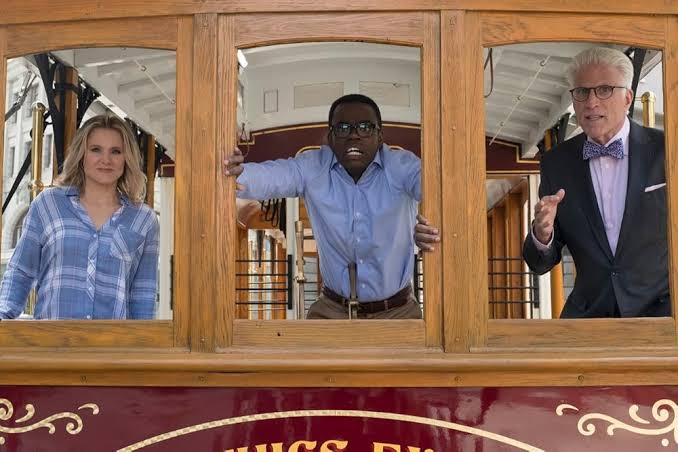
Known and loved for its humorous, sensitive yet sensible analysis of what it means to be a good, or even just a mediocre, person in the modern world, The Good Place is not afraid to tackle philosophical theories and concepts head on. In season 2, Chidi has taken on the mammoth task of teaching demon Michael ethics. In the episode in question, Michael indicates that, much like this author, he struggles with all the theory and could benefit from some practical experience. This is how Michael, Chidi and Eleanor end up in a "real" out of control trolley barreling towards a group of people. Braking is not possible. Changing tracks is, but it would kill one person. Chidi, shocked by the transition from theory to practice, acts too late and splatters all five people over the trolley (and himself). The episode continues by putting Chidi back on the barreling trolley time and again, but always with a twist (now that you've chosen to kill one person instead of five, what if that person turns out to be your friend?).
A short clip from the episode is available on YouTube. Though a little gory, the episode elegantly highlights the moral conundrum at the heart of utilitarianism: if the most ethical action is the one that maximizes happiness and well-being for the largest group of people, what does that mean for the actor and the one(s) being acted upon?
"The Ones Who Walk Away from Omelas" (Ursula K. Le Guin, 1973)
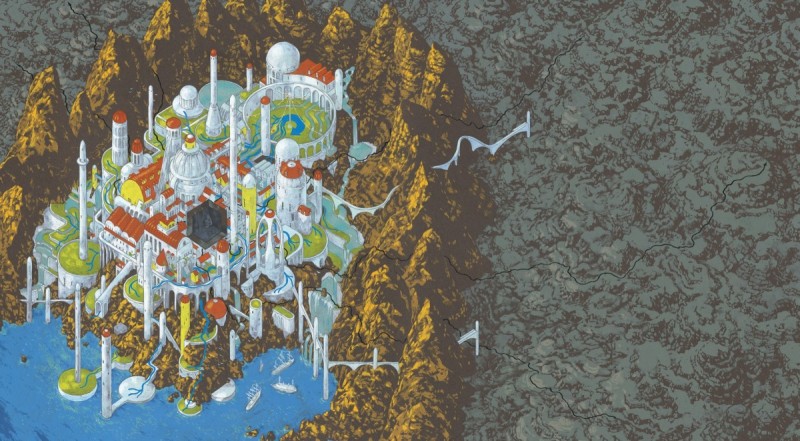
Cleverly making use of a three-act structure, this short story, though now more than 50 years old, is timeless in many ways. It sketches a perfect world, not in specifics, but in feeling. It hints at the utilitarian ideal come to life: maximized happiness, maximized well-being, but not necessarily maximized wealth or power. Goodness, contentedness and joy, enjoyed by an advanced people, are at the heart of its first act. But as we know this story is about utilitarianism, we must know that this society must be based on sacrifice. But whose? And how do the people of Omelas deal with this sacrifice?
Though 5 decades old, I won't spoil the story for your: Le Guin weaves it well, in just a few words, and who am I to mess with that? You can read its 4 pages for yourself here. Be warned, though, this short story may get under your skin.
Next steps
There's a few things you could do after reading this blog. Any one option is as valid as the next.
Watch Widow's Bay. It's really, really good. In fact, I think I may start a rewatch soon! Let me know what you think in the comments.
Watch The Good Place if you haven't already. It'll make you laugh more than it'll make you cry, but it definitely has the power to do both. And in the end, you might learn something about what it means to be a mediocre-to-good person and how consuming almond milk factors into that.
Show your students just the clip from The Good Place or the whole The Trolley Problem episode. Ask them: what would influence their own decision if they were driving the trolley? Can they think of a way in which the world functions via utilitarianism? And is this a good thing?
Read "The Ones Who Walk Away from Omelas" with your students and discuss: what does it mean to walk away from Omelas? What are the parallels between Omelas and our world? And between the sacrifice and our world?
As always, let us know how you're getting on in the comments on or Linkedin!
ABOUT THE AUTHOR

Author: Nanna Freeman
Nanna Freeman is a FlickThink founder and lecturer Critical Thinking at The Hague University of Applied Sciences.